
C.G. Jung's Autobiography Is a Myth (And That's the Point)
Did Jung Lie About His Life to Teach You Psychology?

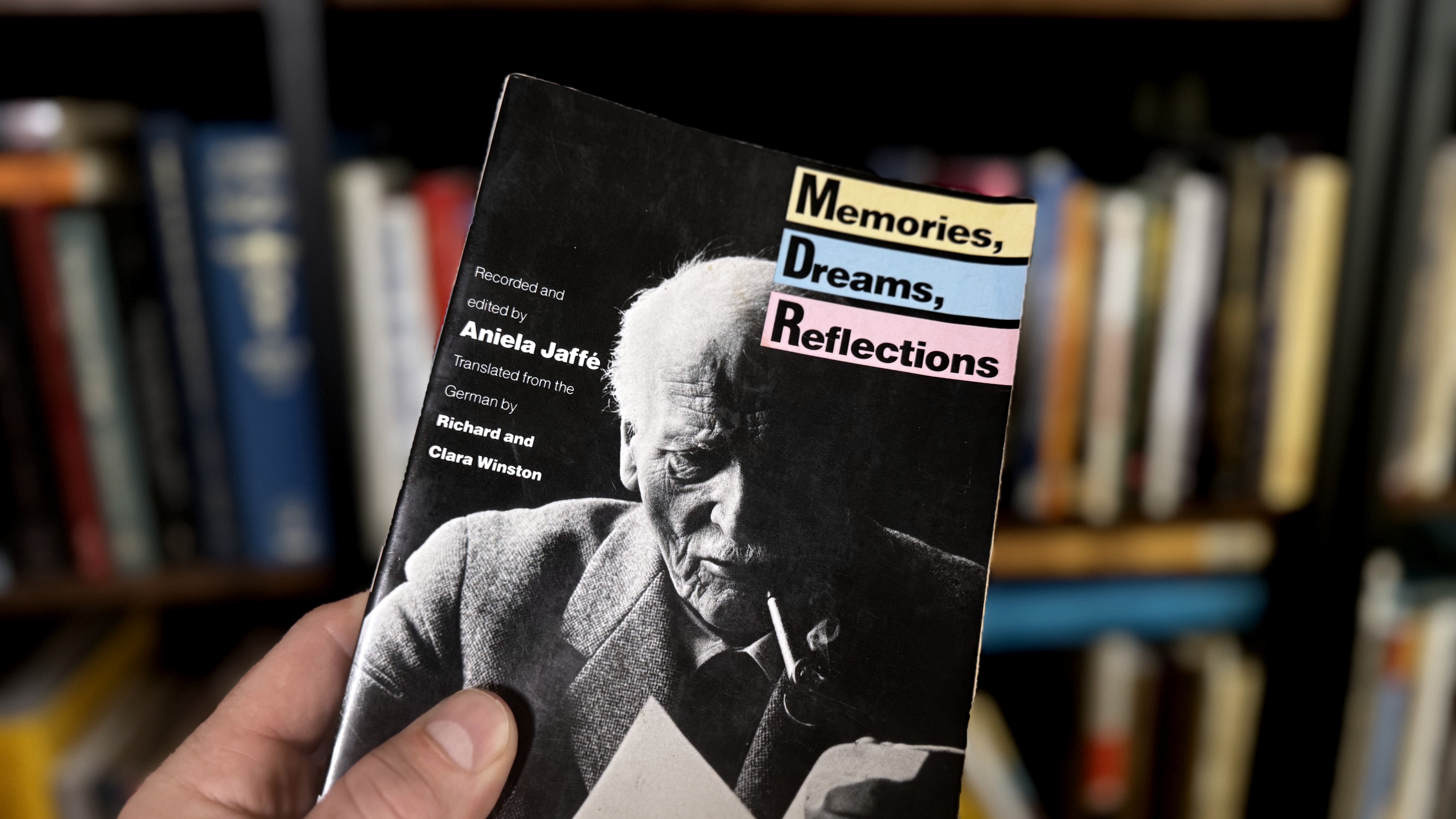
When I first read Memories, Dreams, Reflections (Jung, 1961/1989), I approached it, as most readers do, as advertised—an autobiography, a chronicle of Jung's life rendered in his own voice. After reading the first three chapters twice more, I had an insight. (Hereafter, I refer to this work as MDR.) But the deeper I read, particularly Dr. Susan Rowland's analysis of MDR's literary architecture (Rowland, 2003), the more unsettled I became.
What if this text is not a memoir at all, but something far more strategic: a final demonstration of individuation theory, with Jung himself as the exemplary case study?
Liber Rebis by Jae Botávn is a reader-supported publication. To receive new posts and support my work, consider becoming a free or paid subscriber.
This possibility transforms MDR from personal history into pedagogical performance, raising unsettling questions about the relationship between life and myth in psychological autobiography.
Interesting Facts about MDR
- Jung only wrote the first three chapters of his autobiography.
- His secretary Aniela Jaffé wrote the remaining book in Jung’s voice.
- The book was published posthumously following extensive revisions by his family. Including the deletion of an entire chapter involving his mistress, Toni Wolfe.
A close reading of MDR has critically examined the text's overarching implications and raised more questions about what is absent than what is present.
To write an auto/biography, one must dissect the anatomical self. In auto/biography, the tools for this dissection are words.
Yet a paradox emerges: the act of deconstructing a life story with words simultaneously constructs a life story with words. These lines blur with possibility and contradiction. Are the events Jung describes actual memories or mythical reconstructions?
Although the narrative centers ostensibly on Jung’s inner world, in the opening chapters of MDR, he appears to be staging the unification of his life and his psychology.
This becomes evident through his emphasis on integration of inner and outer aspects of the self as a guiding archetype—what he calls the totalizing psyche. These integrations include his dreams, which exist outside time and space, juxtaposed against conscious amplifications anchored within temporal and spatial reality.
Jung’s omissions underscore his inclusions with telling precision: he says remarkably little about his wife, Emma, and sister, Gertrud, yet emphasizes his intellectual precocity throughout his youth. His depictions of his father’s theological rigidity and his mother’s uncanny daytime presence, which contrast with her formidable nocturnal personality, lack a certain sensibility or feeling tone—as if rendered more as archetypal figures than complex individuals.
Meanwhile, his dreams are retold with exacting precision, which raises questions about mnemonic accuracy given the approximately seventy-year gap between experience and narration.
Here are my questions:
Is MDR a carefully crafted narrative in which Jung deploys himself as a case study, demonstrating his theory through mythological retelling? Was there a premeditated agenda? Did Jung and Jaffé conspire to write a persuasion piece rather than an account of Jung’s actual life? Is MDR a covert pedagogical manual in which the reader develops interpretive language to recast—and therefore shape—the self using the author’s illustrative example? Was Jung reflecting on his legacy or willfully curating his personal myth?
Or all of the above?
Warmly,
jae
Reference
Jung, C. G. (1989). Memories, dreams, reflections (A. Jaffé, Ed.; R. Winston & C. Winston, Trans.; Rev. ed.). Vintage Books. (Original work published 1961)
Rowland, S. A. (2003). Jung, myth, and biography. Harvest: International Journal for Jungian Studies, 49(1), 22–39.
Liber Rebis by Jae Botávn is a reader-supported publication. To receive new posts and support my work, consider becoming a free or paid subscriber.