
What If Love Isn’t Meant to Make You Happy?
Unpopular Opinion for Uncommon Love

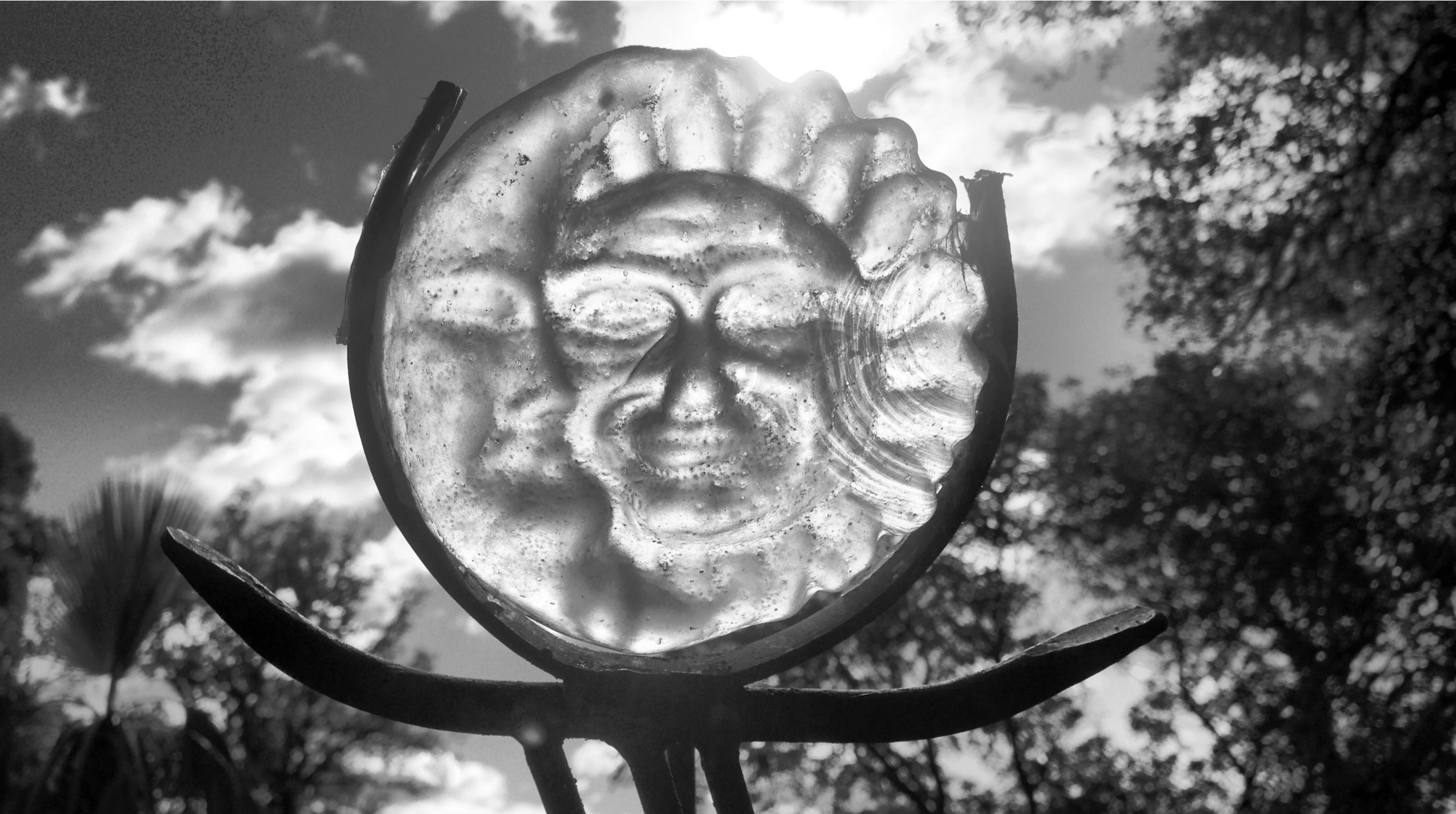
“Anyone who loves must risk disappointment; the wisdom of love comes in accepting the disappointment without bitterness.” —Marie Louise von Franz, Anima and Animus in Fairytales
I need you to walk with me for a moment, to set aside everything you think you know about love and listen—not just with your ears but with your whole being. I want you to let go of the idea that love is supposed to make you happy.
What if it isn’t?
Thanks for reading Love Letters! Subscribe for free to receive new posts and support my work.
What if love is here to change you, to refine you, to stretch you into the fullest version of yourself?
We live in a world where relationships are shifting, where gender roles and expectations have been dismantled, leaving us standing in the rubble trying to decide what is worth salvaging and what was never meant to last.
This is where we find ourselves, attempting to rebuild connection in a way that fosters harmony rather than division.
But here’s the thing: we can’t afford to keep looking at love through the same lens. We need a new way of seeing, of being, of loving.
And for that, I need you to suspend judgment and step into this moment with me.
What if love is a process, like writing a song, like painting a masterpiece, like learning to drive a jet while flying at 200 miles per hour?
What if, each time you enter into love, you are activating something far greater than yourself—a machine of cosmic precision, an art form both delicate and brutal?
We glorify love, yet we crash and burn in it. We hunger for its highs, endure its lows, chase its promises, and grieve its losses.
Why?
Because love is the most addictive substance we know.
But do we understand its addictive qualities as an antidote instead of a pathology?
Here’s what I’ve learned after spending four years relentlessly studying the psychology of love from the deeply pathological, like Narcissistic/Borderline relationships, to Chivalrous love sung by the Troubadours.
- Red Flags can not be seen from your blind spots—there is no point in looking.
The Only Two Green Flags that matter:
- Sexual chemistry and a mutual willingness to grow.
- There is no secret—only a path that must be walked.
Everything else?
A labyrinth of complexity. Love is not a list of rules or a manual of tactics from attachment theory, narc coaches, or self-love.
Love is a force that transforms you, and that transformation is often painful. It requires internal shifts so profound that the landscape of your soul will never look the same again.
Let’s Normalize Love in Its Messiest Forms:
- Love addiction
- Trauma bonds
- Toxic cycles
- Narcissism
- Codependency
“Be careful, lest in casting out your demon you exorcise the best thing in you.” — Friedrich Nietzsche
If we keep demonizing the things that make us human, we will never integrate them. And if we don’t incorporate them, we will forever be at war with ourselves, and projecting onto others what we can’t see in ourselves. Suppressing the very forces that, when understood, can lead to our most significant growth.
You and I both know this: no amount of self-love will erase the hunger for a lover’s gaze, the safety of their arms, the thrill of their praise. Love is not just about joy—it is about becoming.
We have got to stop lying to ourselves to sell courses, coaching on the premise of feel-good narratives.
True love is a crucible.
It is a mirror held up to you, forcing you to confront yourself in ways nothing else can. It is a reckoning. And it is only through walking through that fire that we emerge whole.
So let’s redefine what it means to love.
Love Moves in Cycles
In psychology, there is a concept from the French word rapprochement. It is the natural rhythm of coming together and pulling apart. A relationship that lasts must be able to withstand these cycles, repairing itself at three levels:
1. Physical (sex). Yes, fight and have hot makeup sex. This can be momentary healing, but if that’s the only way you repair, you are missing the deeper work. And the Fight and make-up become a “toxic cycle.”
2. Psychological. Emotions are the undercurrent of every rupture. They reveal wounds that need tending. This is where therapy, self-awareness, and communication skills come in. But there is a greater mystery, like collecting projections, diffusing the anima/animus function, and integrating shadow material.
3. Spiritual. The relationship itself must have a purpose beyond the two of you—a shared vision, a commitment to something greater than yourselves.
A toxic cycle is one that repeatedly ruptures without repair across all three levels.
Think of it as a video game—you will keep replaying the same level until you learn what you need to move forward.
Just as seasons shift—winter into spring, summer into fall—so does love. And as much as we crave the warmth of summer, winter always returns. Love is cyclical, not linear.
What We Call Disorders Are Often Just Patterns of Protection?
What if love addiction, personality disorders, trauma bonds—what if all of it isn’t *wrong* but just an attempt to cope?
What if these behaviors are simply defensive structures we built in response to our childhood wounds?
What if they can be worked with rather than demonized?
Recovery is often framed as “returning” to some past state. But the past is gone. Trying to recover something that no longer exists is just another form of addiction—a cycle of chasing ghosts. True healing is not about returning. It is about integrating.
Sobriety, too, is often misunderstood. It isn’t the opposite of addiction—it is still part of the same spectrum. The compulsion remains; only the object shifts.
Transformation Happens When You Accept the Whole of Yourself
You have played many versions of yourself. You will play many more. The fundamental shift happens when you allow all of those selves to exist without shame and step into the unknown self you are becoming.
Dr. Keith Witt, a clinical psychologist who has spent decades studying what makes relationships work, says great partnerships come down to five simple factors:
1. Shared sexual polarity (masculine/feminine energy).
2. A mutual commitment to physical and emotional well-being.
3. A shared willingness to return to love.
4. A shared willingness to be good parents (if applicable).
5. Each partner has an individual soul purpose.
That’s it. Not a formula, not a rigid system—just a set of principles to orient you toward a relationship that doesn’t just survive, but thrives. Fuck the rest because we are all toxic.
We are so inundated with advice, tactics, and solutions that we forget the simplicity of what love is at its core: a collision of biology, psychology, and the ineffable mystery of existence—something wholly human.
Love was never meant to make you happy.
It was meant to make you whole.
Thanks for reading Love Letters! Subscribe for free to receive new posts and support my work.