Why Clinical Psychology is NOT "Scientific" Depth Psychology vs Clinical Psychology, which one requires greater faith?
Waking in Tears: Why Your Dreams Speak Through Your Body Moving beyond Jungian compensation to discover the dream's multivalent invitation
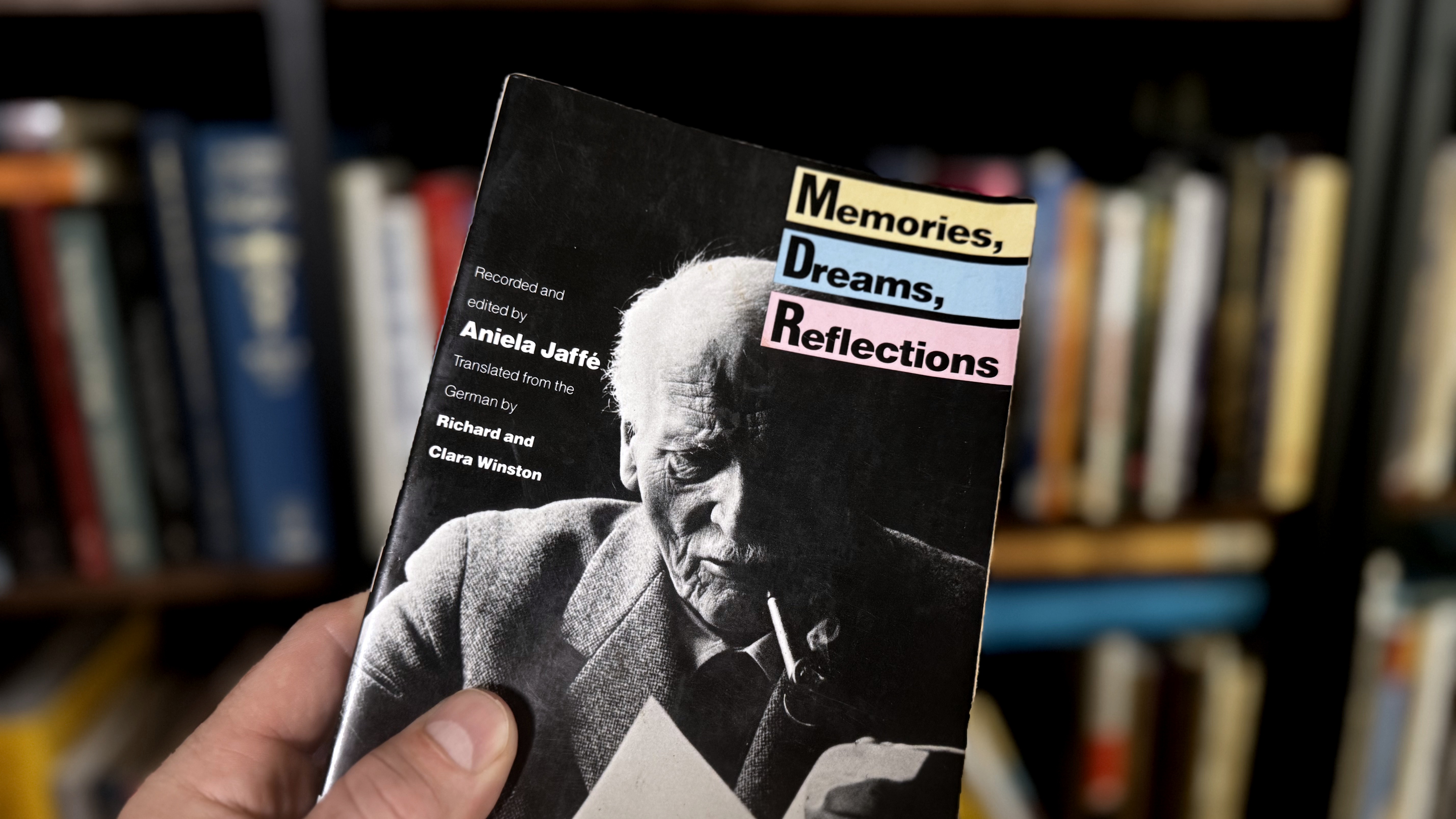
C.G. Jung's Autobiography Is a Myth (And That's the Point) Did Jung Lie About His Life to Teach You Psychology?
Culture Dreams On or On Dreams? Dream time is the fantastical and sometimes phantasmagorical abstract world in which organized waking consciousness dissolves into autonomous adventures…
Two sides, One Dream. Did Carl Jung Interpret His Dream Incorrectly? An Error That May Have Cost Jung His World Famous Friendship with S. Freud.
Transcendent Love: A Jungian Film Analysis of Rebecca (2020) Daphnie du Maurier's Dark Gothic Classic Descends into Potent Psychological Relationship Symbology
Depth Psychology & the Soul’s Speech: Psyche, Logos, & Postmodern Meaning-Making A History from Freud, Adler & Jung to "Depth Work" against the Reductionist's Medical Mental Health Model.
Carl Jung Great Mother Archetype & the Modern Relationship Crisis A recent Pew survey, summarized by DePaulo (2020), reports that half of socially single U.S. adults are not interested in a romantic relationship or even a date. Most striking, 71% of single women over 40, compared with 42% of men, say they are not looking for romance (DePaulo, 2020)
Carl Jung Apollo vs Superman: Jungian Analysis of Solar Archetypes From a depth-psychology perspective, the question “Is Superman a degraded or upgraded Apollo?” is really asking how the ancient solar-hero archetype appears in modern popular culture. Apollo personifies light, order, rational distance, and a godlike authority that can heal or destroy. In Jungian terms, he is one cultural
A Sad Truth: Is Evil Necessary for Ego-Self Development? Typically, we see the work of the devil as the “shadow of God.” In some social and Jungian interpretations, we see evil as a shadow of an asymmetrical God-image. Then, postulate the corrective for what the Western God-image may impose, i.e., patriarchy, etc. As if once the
To Magic or Not to Magic: Depth Psychology Grows a Pair Would it be more productive for depth psychology to approach Magic? First, there is an ambiguity I wish to clarify regarding the grouping of magical systems, such as those of Israel Regardie, and the distinction Gyimesi seeks to explain between psychoanalysis and the occult. The colloquial term "occult"
Are Myths a Purer form of Archetypal Expression than Religious Creeds? Artist: Jake Baddeley To determine if a myth is a purer expression of an archetype than a religious creed, we must first define the difference between a religious creed and an archetype. Freud tracks three criteria of the mythological gods and their use by civilizations, which followed a progression into
Is AI Fire from the Gods or an Unsinkable Ship? Artist: Jake Baddeley The contemporary surge of artificial intelligence repeats the Titanic–Promethean pattern: collective faith in technical “gigantism.” A possible hubristic inflation, which invites compensatory descent and sacrifice. Drawing on Jung’s account of unconscious compensation and individuation, a psychologically informed relation to AI would cultivate sacrificial limits and
Is Depth Psychology a Science? Jung, Freud, and the Subject–Object Dilemma Explained Artist: Jake Baddeley Science, as far as it is defined by its methodology more so than its aims, is indispensable even if objectively imperfect. Despite the inherent limitations of scientific objectivity, the psychological heuristic approach remains one of the most valuable ways to engage the subject–object dilemma, not by
Inside the Archetypal Field: Jung, Jacobi & Whitmont on What Moves Beneath the Mind Artist: Jake Baddeley Field Notes: The Essential Jung by Anthony Storr Jung makes a distinction between a “big dream” and an “ordinary dream.” Such “motifs," he says, are typically “highly impressive,” “numinous,” and “analogous or even identical to mythology.” Jung refers to these patterns as “structures,” and he then
what does it mean to live like Carl Jung Living Jung vs Being Jungian Artist: Jake Baddeley I am anecdotally reminded of my ex-girlfriend’s “Jungian” psychotherapist. My ex and I were at the gym together. I was quietly slipping her sexy compliments. She snickered and replied, “My therapist says you are my shadow.” Outwardly, I grinned, but inwardly I twisted. I thought
Who am I? The i and the not i Once upon a time, I floated weightlessly in the waters. I was the water, and water was me. As an infant-child, I was mother and mother was me, then I became the world and the world was me. What I did, and what I did not do, what I
Freud vs Adler: Memorable or Meritorious Artist: Jake Baddeley I have thought about this question before, considering whether the answer lies in their merits or more in observing social phenomena. Adler, Freud, and Jung were contemporaries in a shifting cultural landscape. A period in history teeming with national tensions, war, and a burgeoning curiosity for defining
The Royal Road: Complex as Corridors Artist: Jake Baddeley A complex is a complicated psychological function, apprehended as “the feeling-toned groups of representation in the unconscious” (p. 6). Considering its dual nature as both a developmental and environmental response to an archetypal image "projected onto an external object or person” (p. 16), and its
Magick & Jung: Possible Parallels with Depth Psychology Artist: Jake Baddeley Depth psychology is traditionally traced to Freud’s psychoanalysis and Jung’s analytical psychology. Shamdasani writes, “Through studying prehistoric, primitive, or modern societies, these disciplines attempted to surpass the limitations of individual psychology” (2003, p. 271). Yet these 'modern' roots conceal deeper, occult currents with
The Collective Problem: Death of Symbol & “Loss of Soul” Artist: Jake Baddeley "The structuring of our minds makes us experience existence in the dualistic form of the world of ‘outer’ objects, which we are able to organize, and of ‘inner’ impulses, which we find hard to master" (Whitmont, 1969, p. 29). This dualism reflects an essential problem
Breaking the Spell: How Two Women Invented the Love Addiction & Codependency Epidemic Opportunists in the Right Place at the Right Time? The concepts of codependence and love addiction emerged in the 1980s as popular, oversimplified pop-psychology explanations for dysfunctional relationship patterns, thanks in large part to two figures, Melody Beattie and Pia Mellody. In this blog post I will explore the
Exposing the Love Addiction and Codependency Fraud Artwork by Jake Baddeley This entry is inspired by events I witnessed, experienced, and detailed in my upcoming book, Unlearning Love: Reclaiming Desire from Diagnosis. *If a predatory treatment center has victimized you or someone you know, please follow this link for more information: National Association for Addiction Treatment Provider